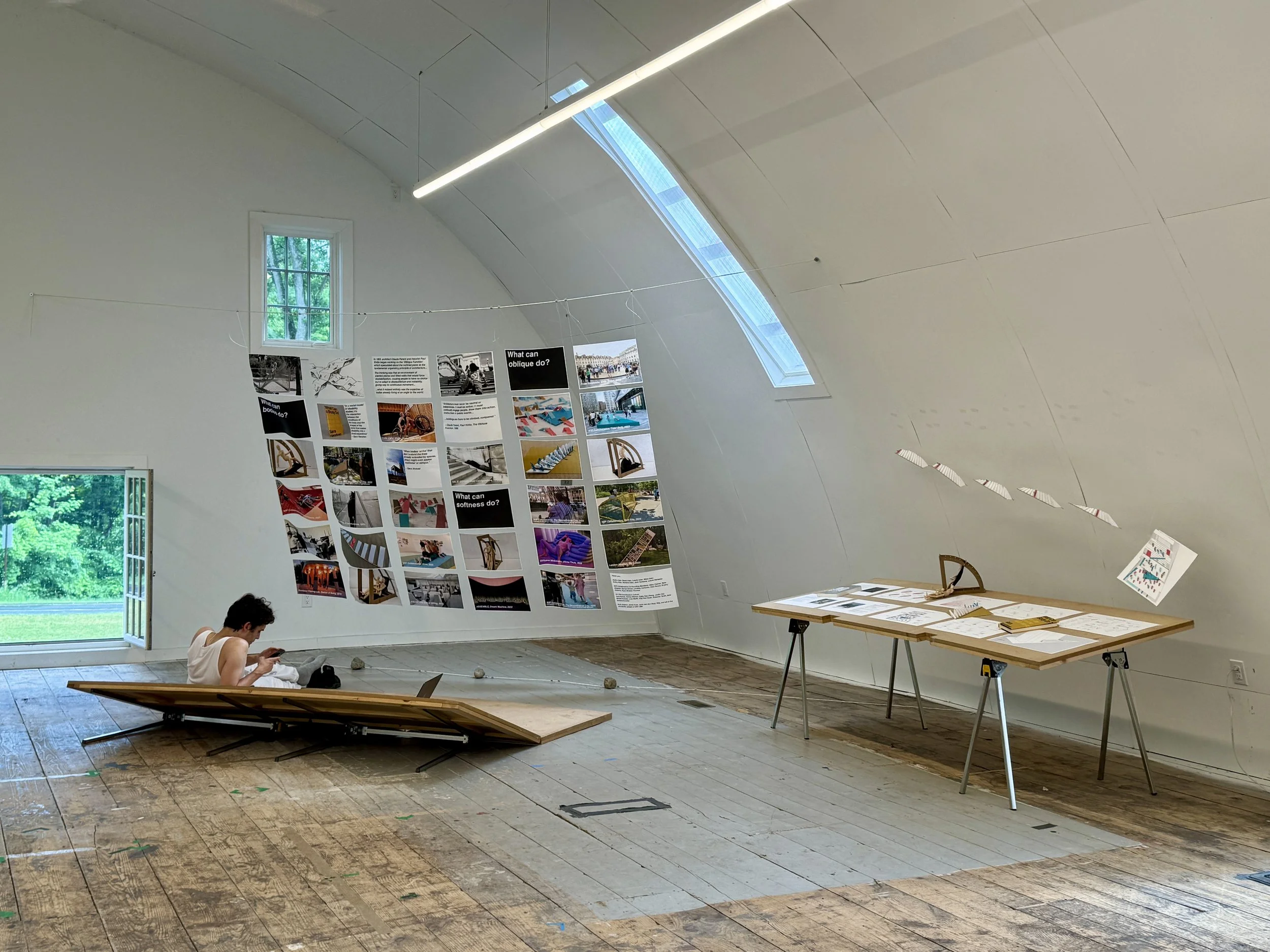
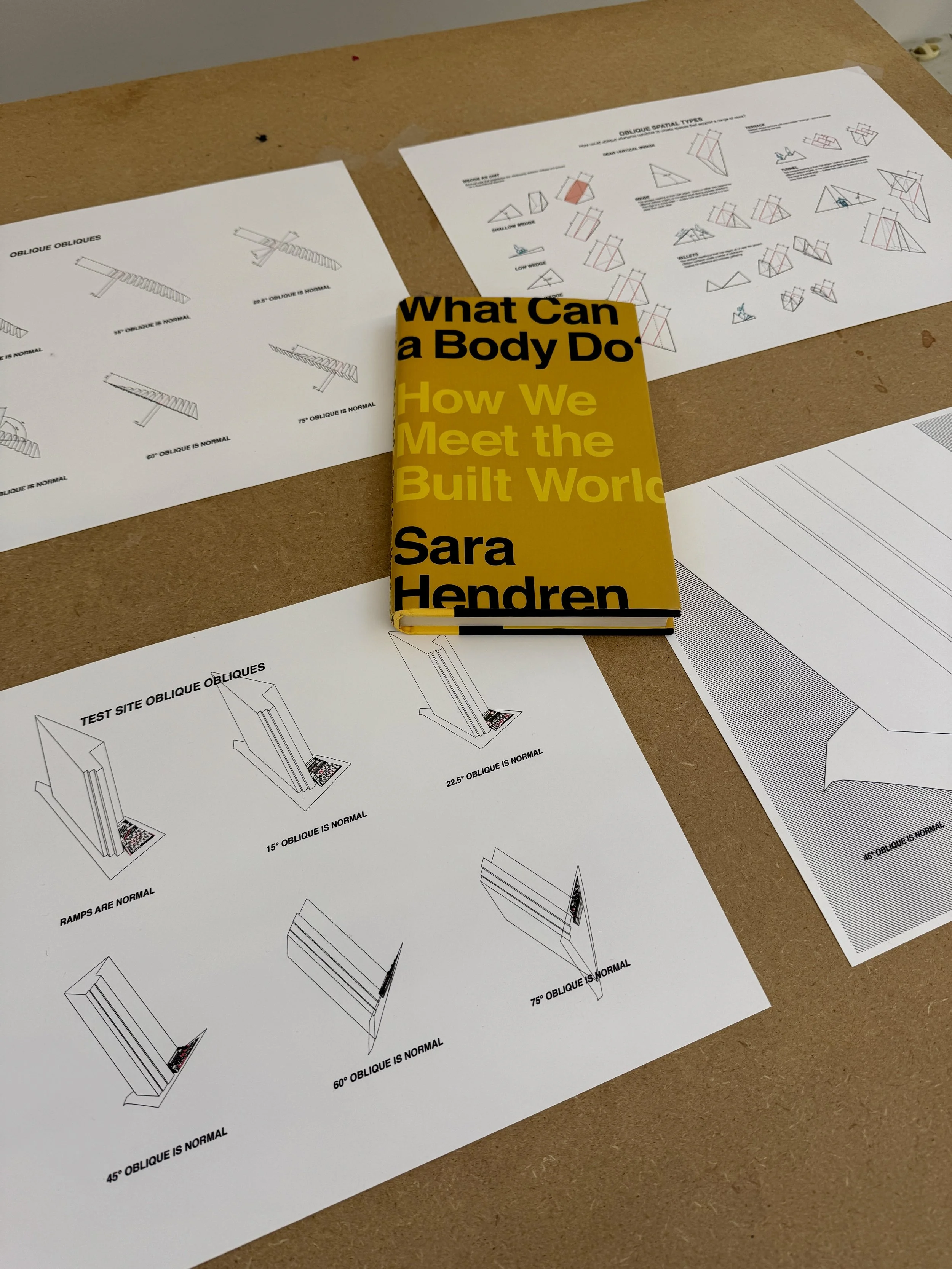
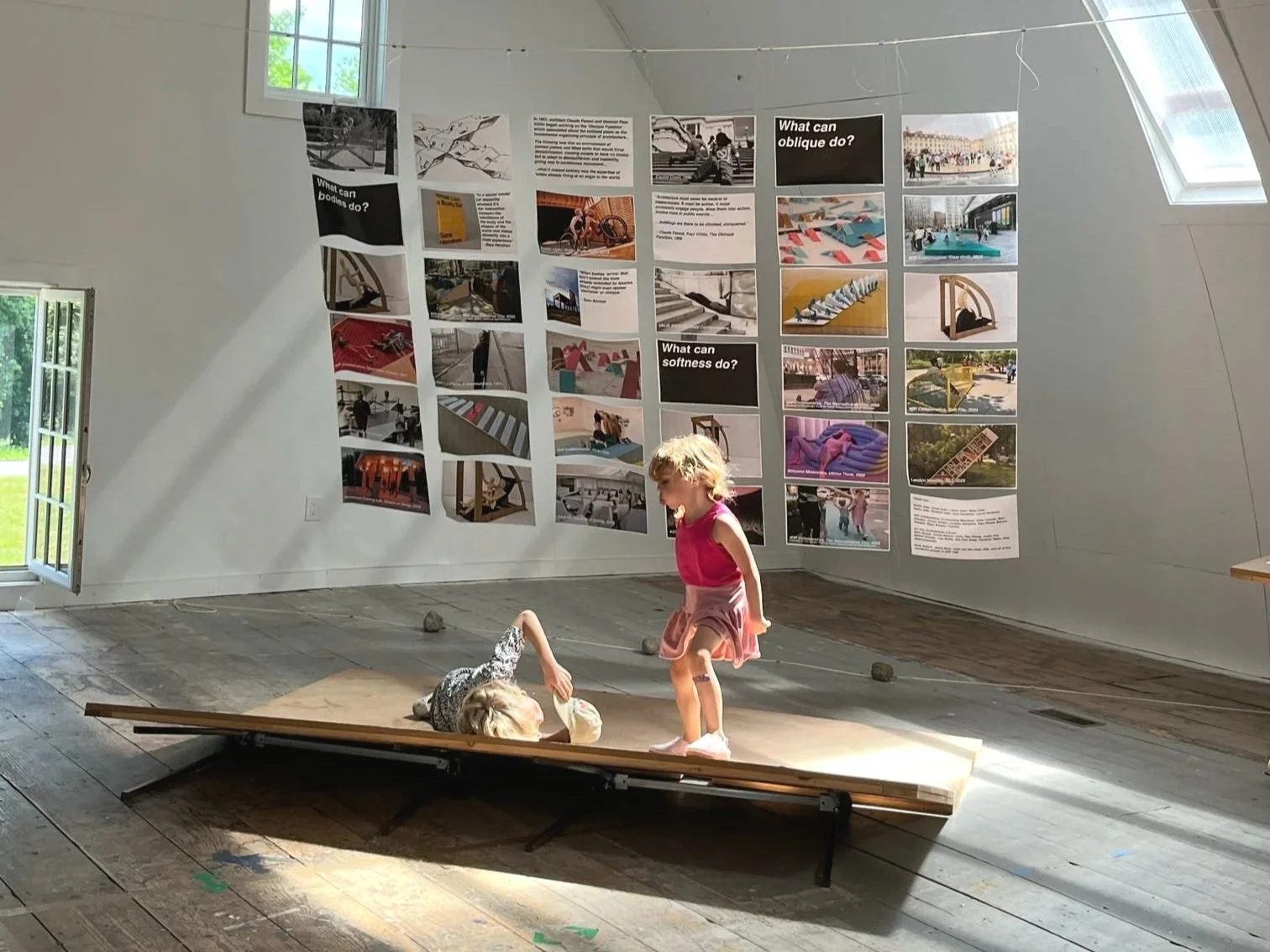
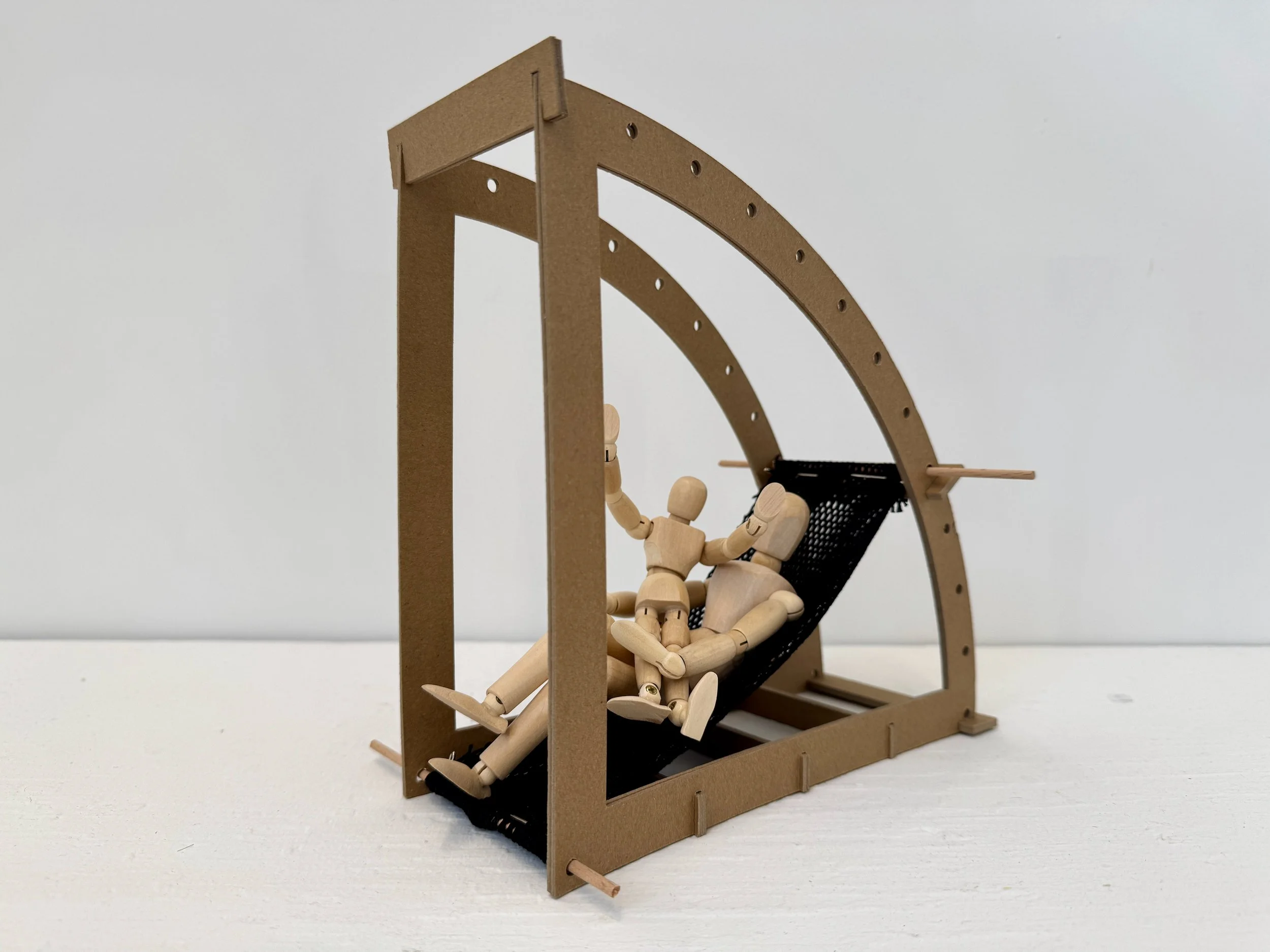
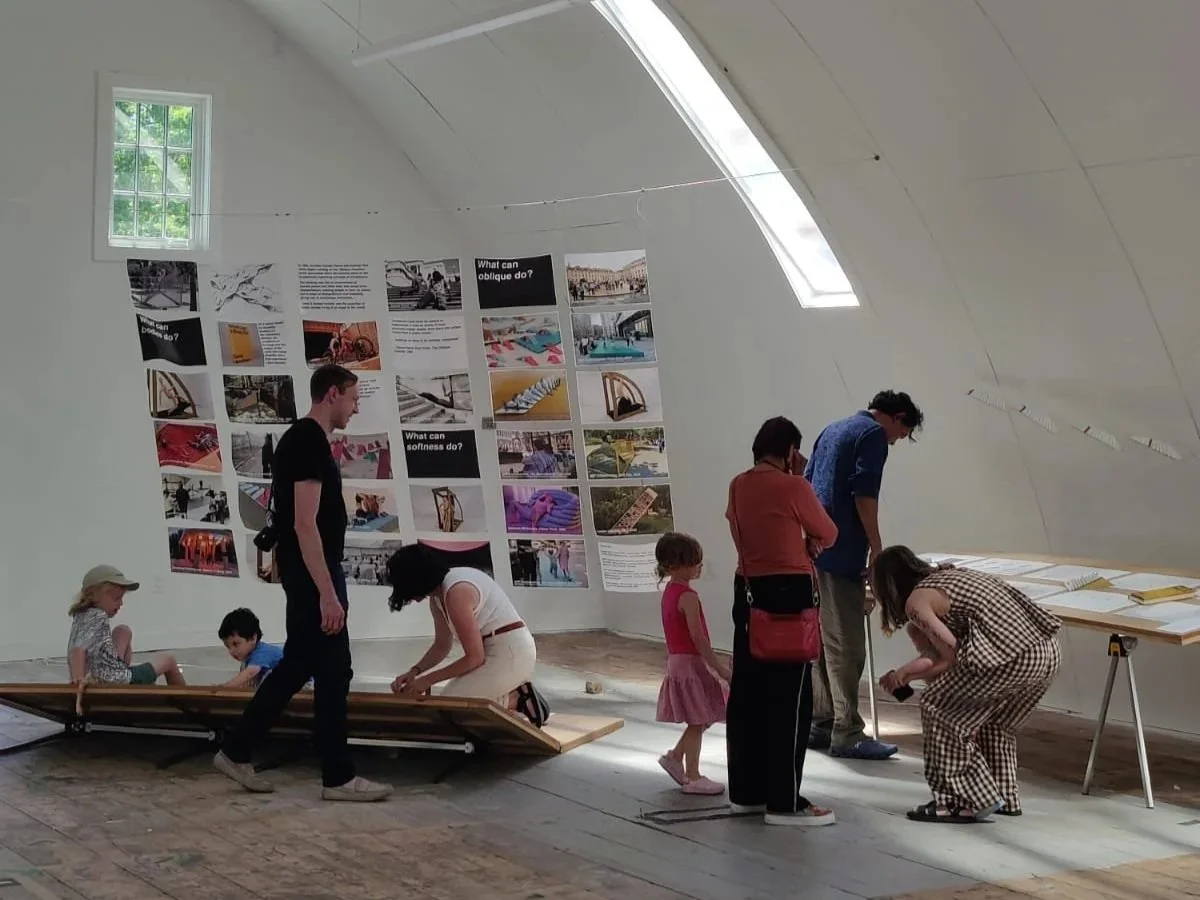
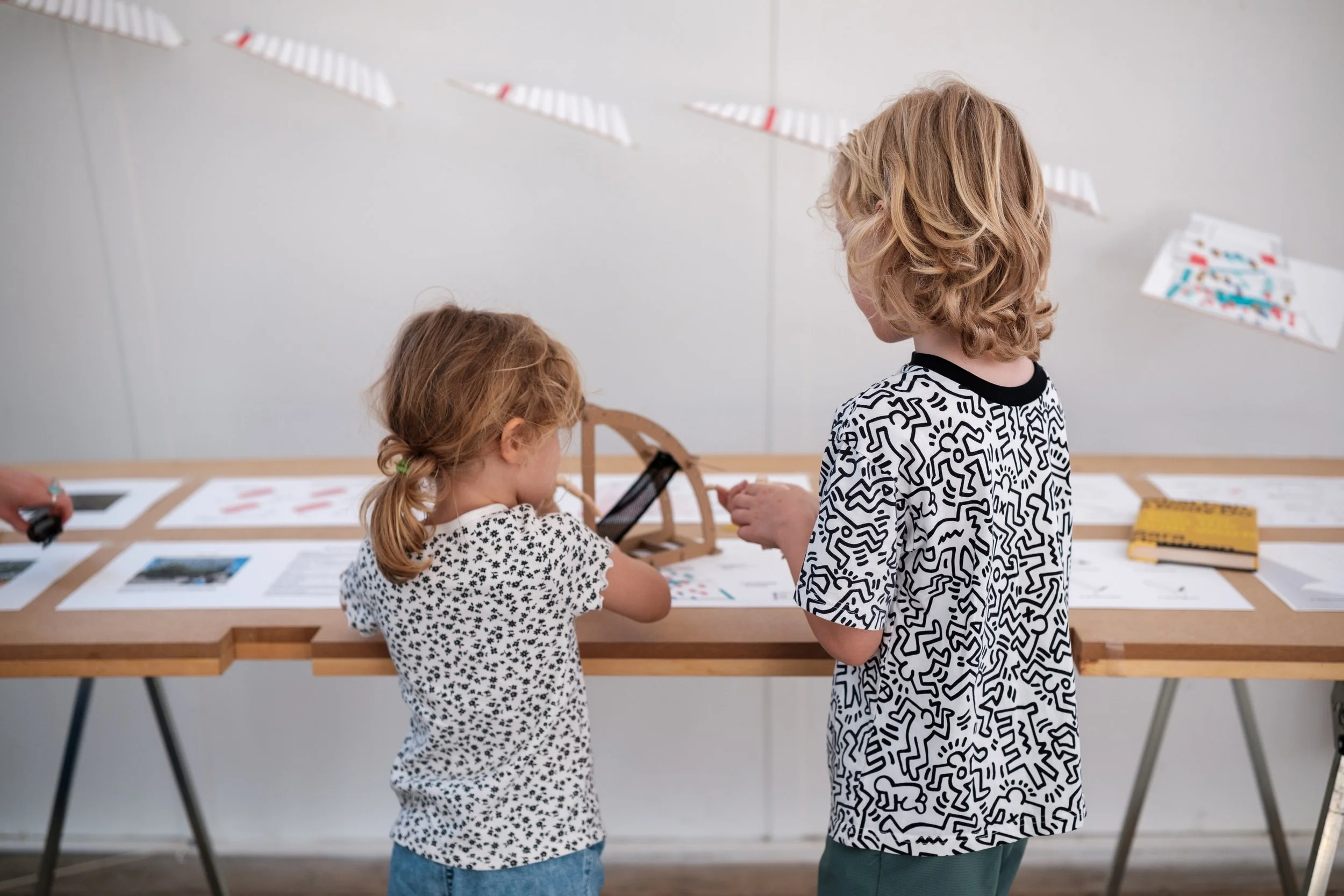
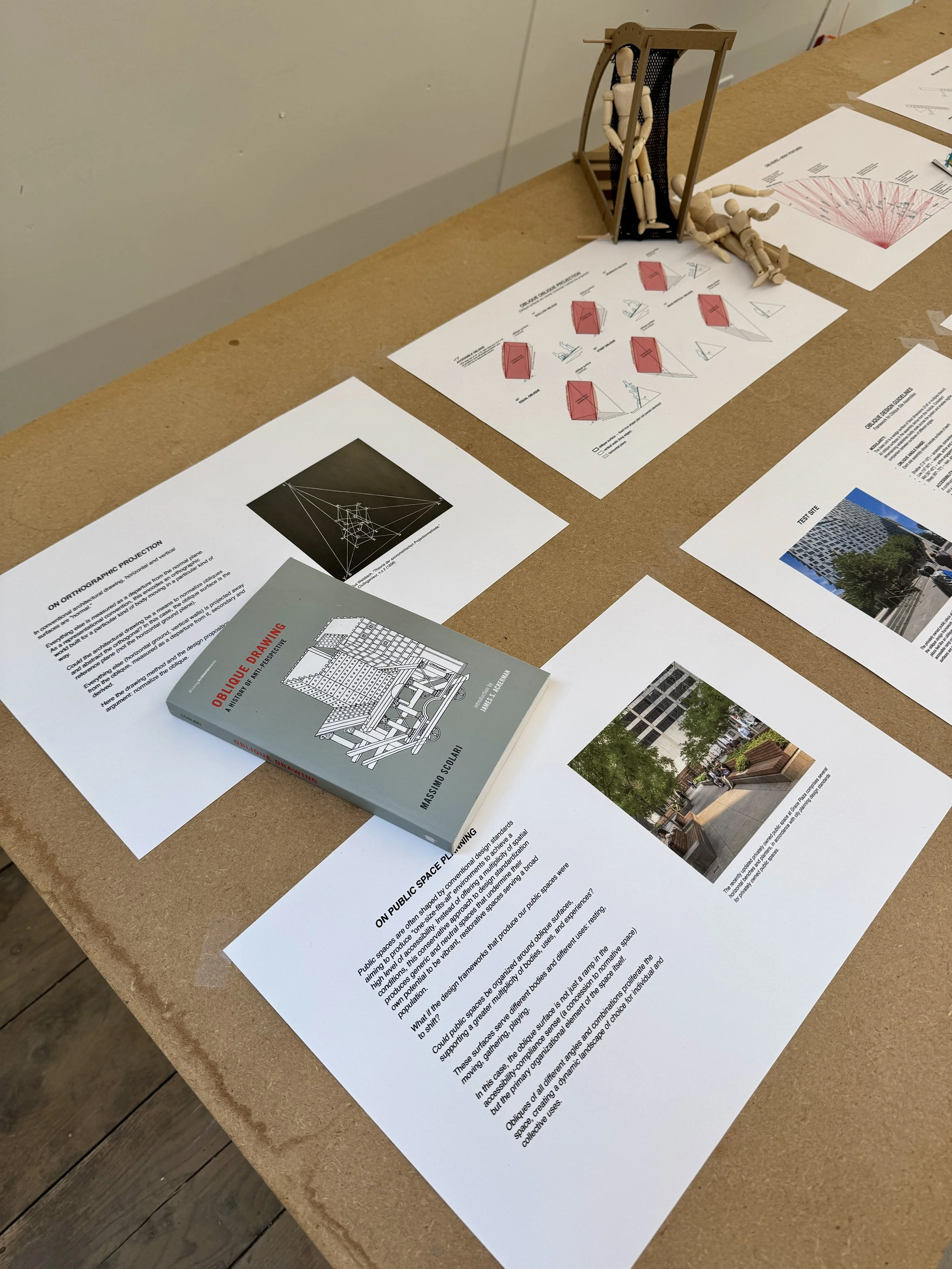
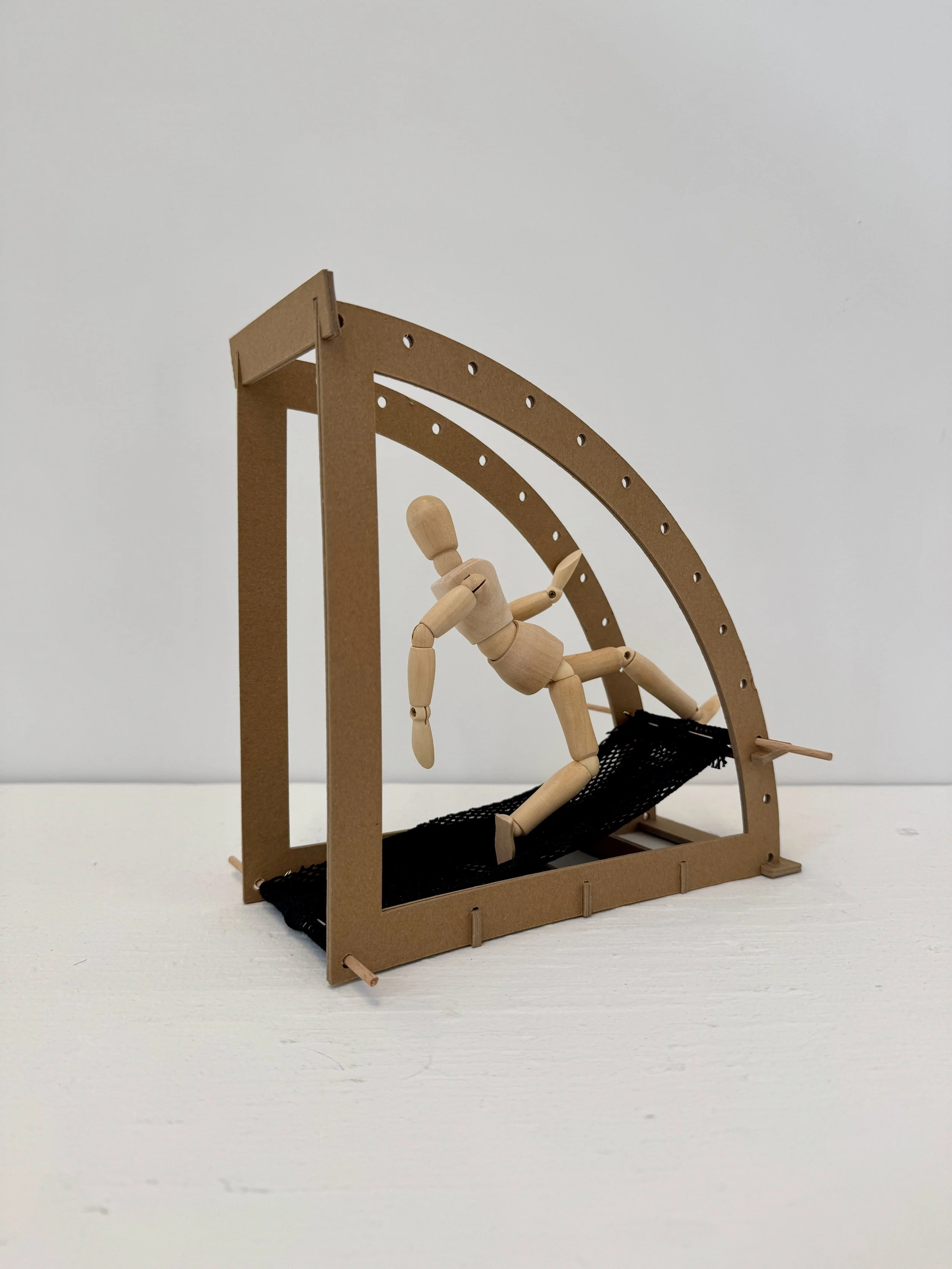
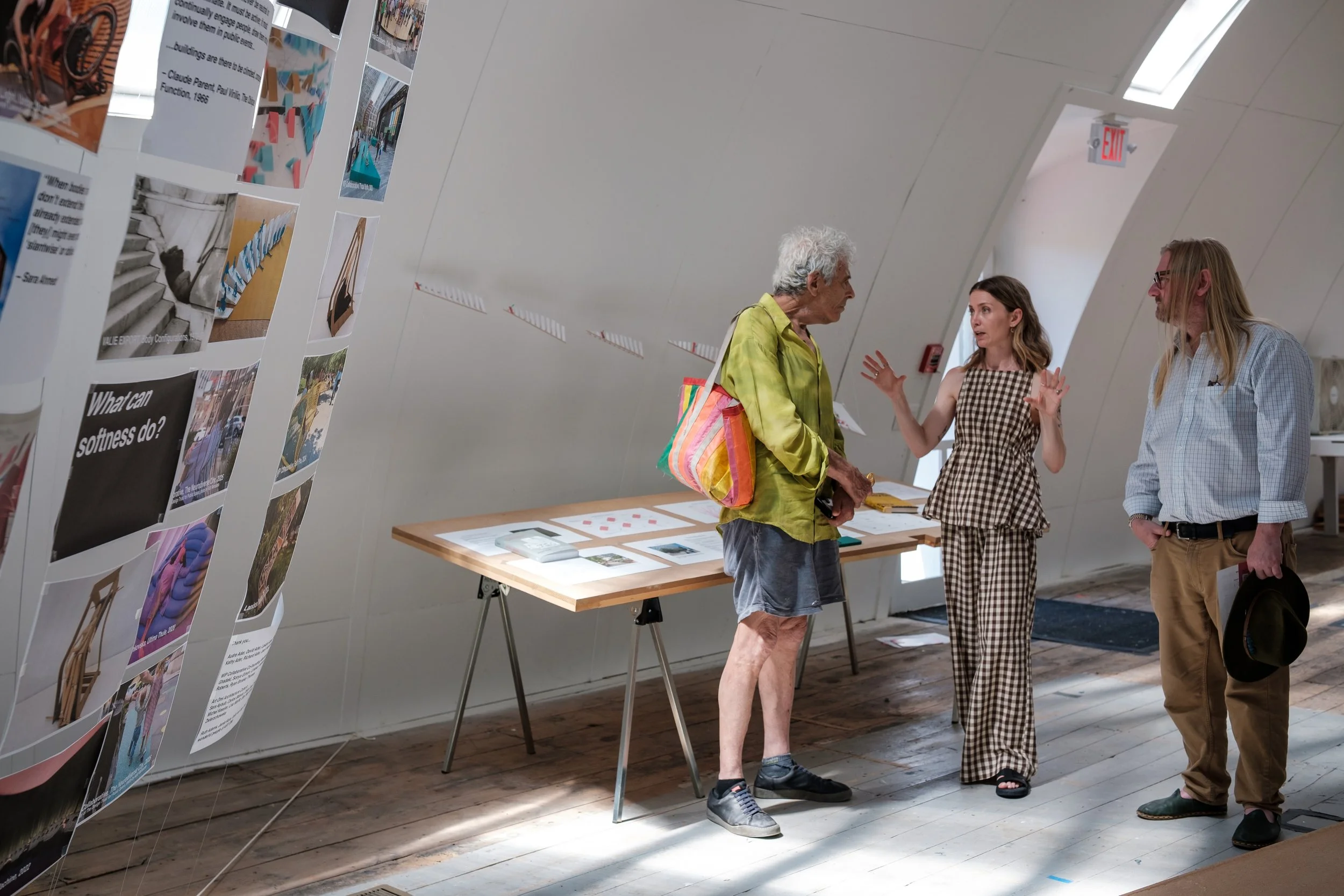
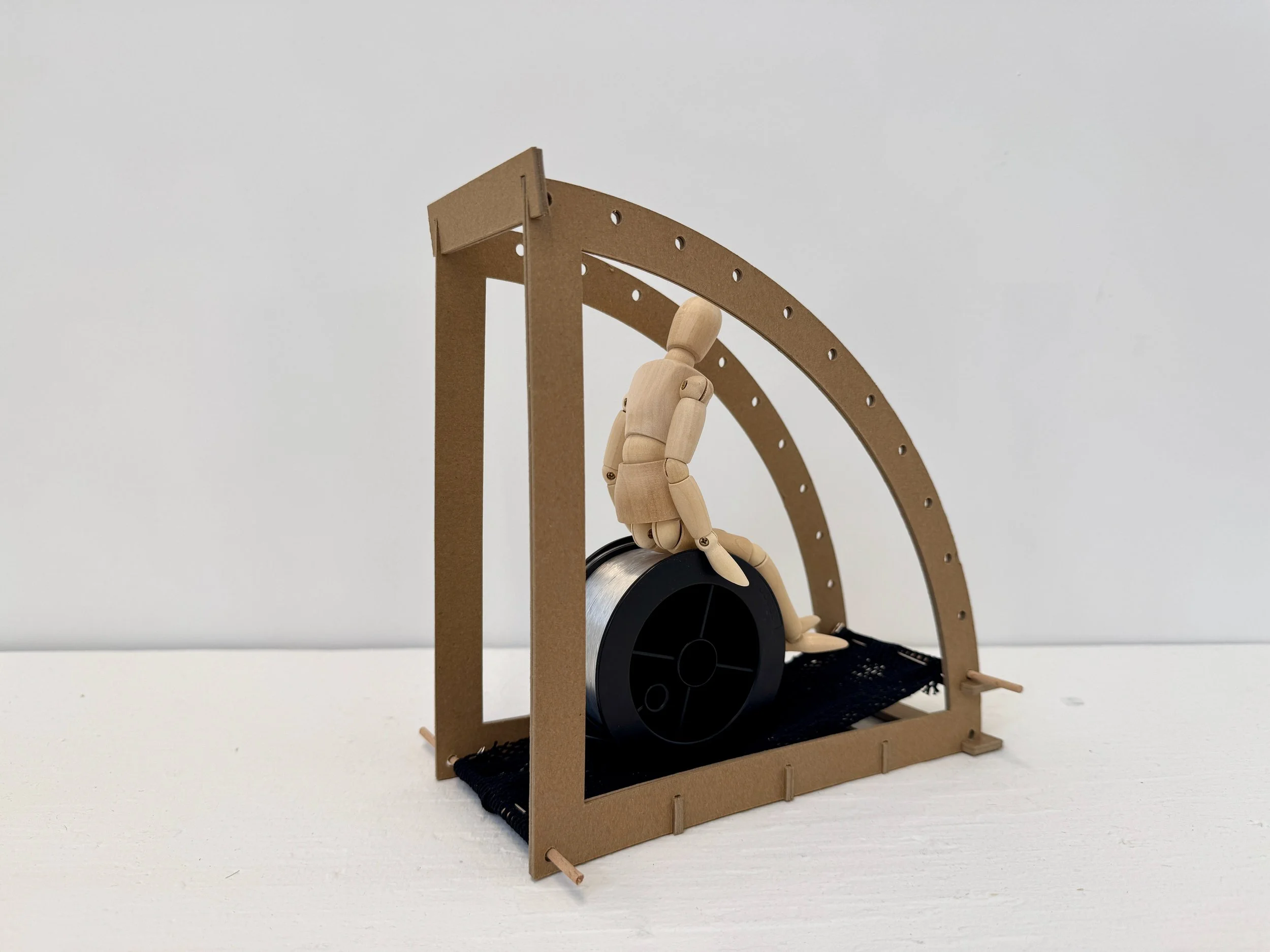
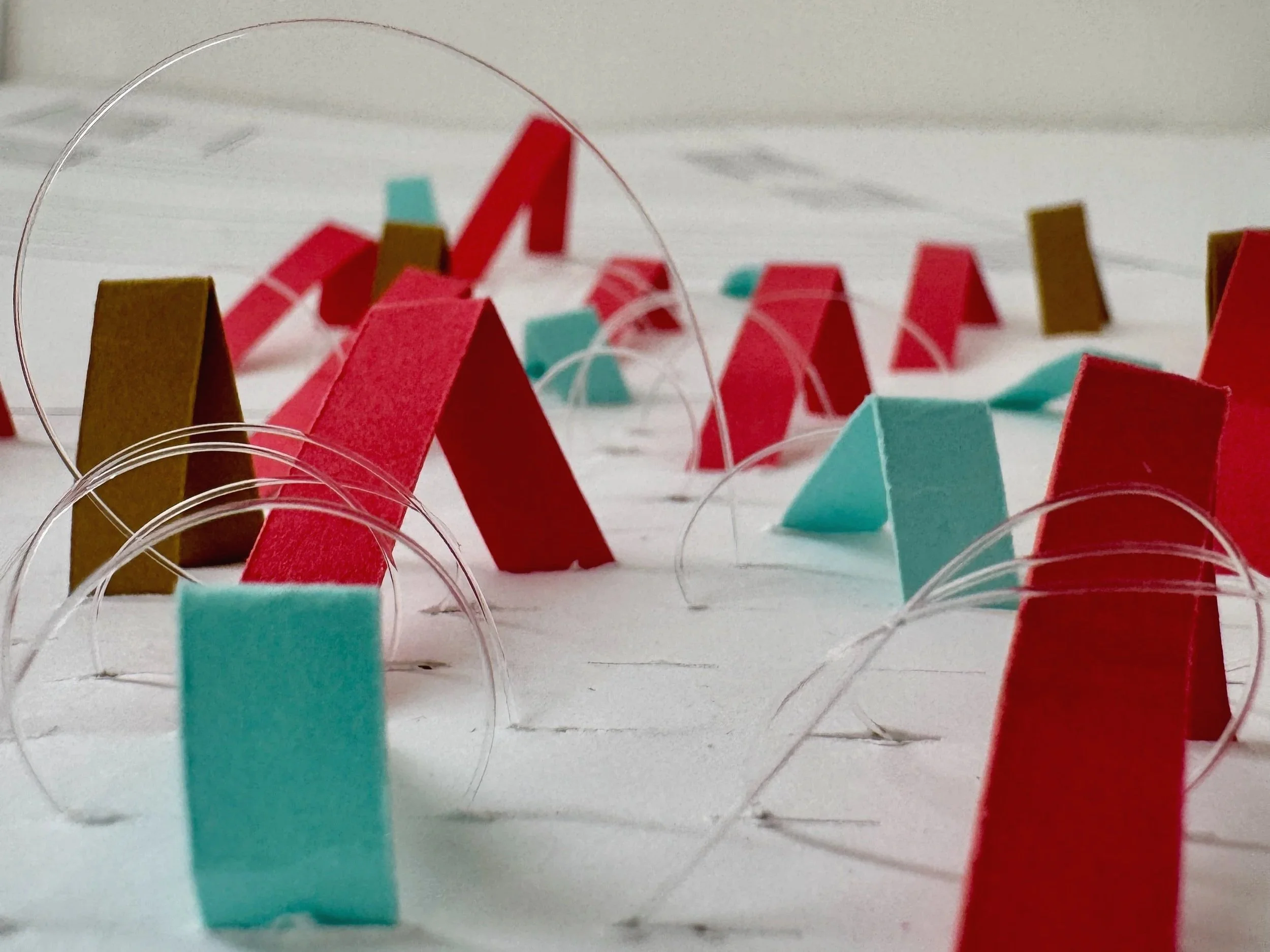
Soft Oblique installation at Art Omi Open Studios, June 2026.
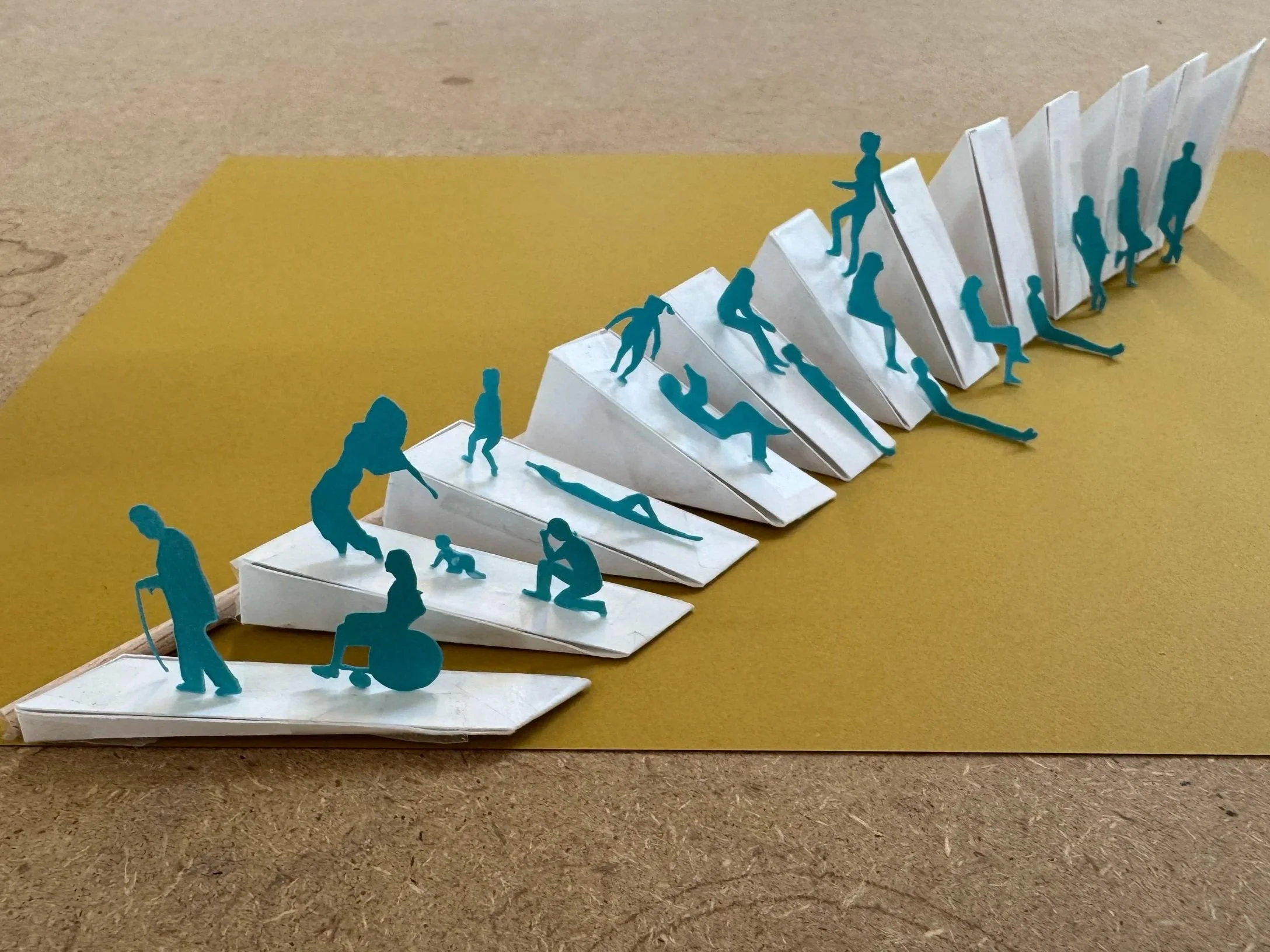
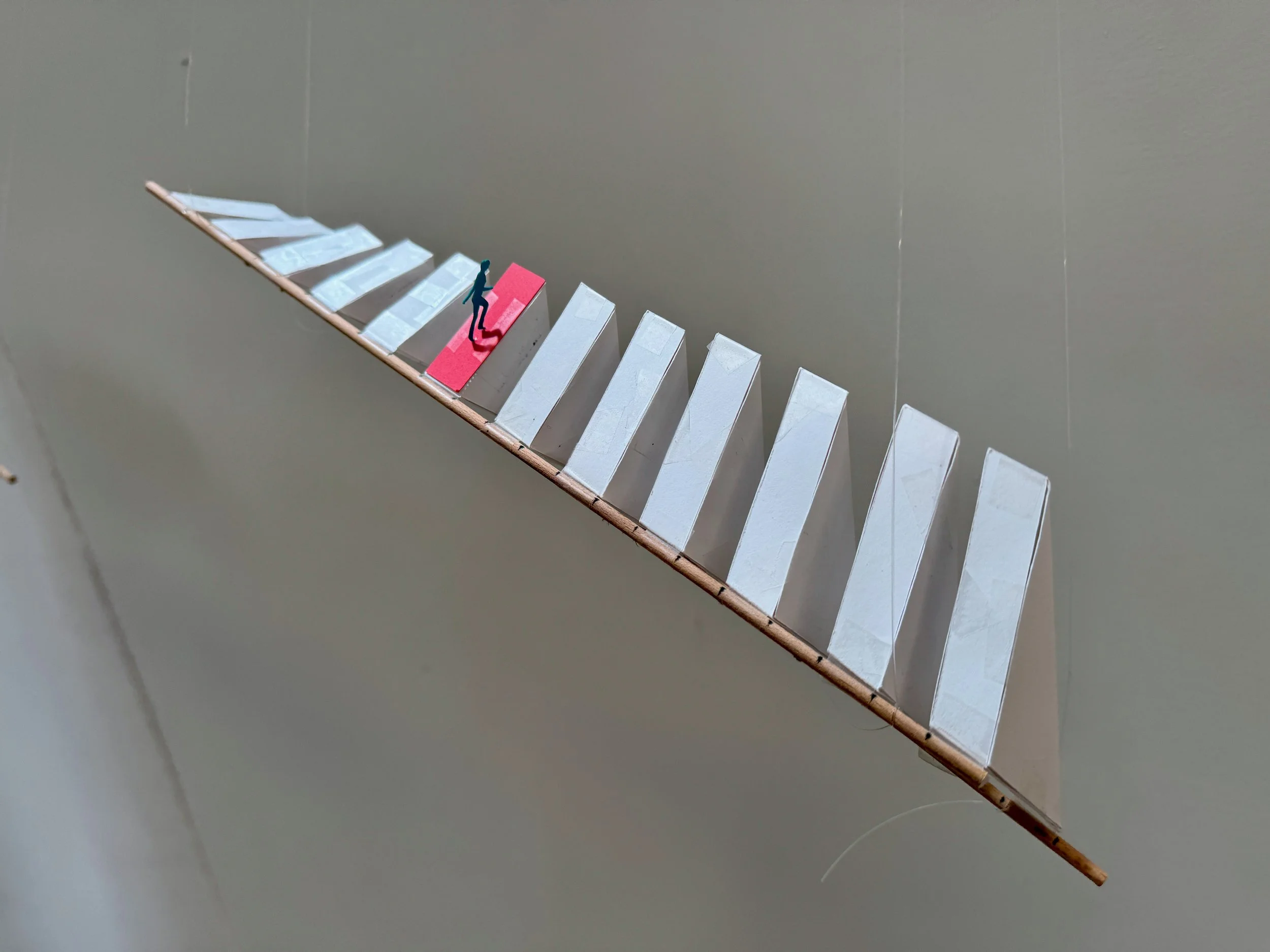
Model by Lindsay Harkema
SOFT OBLIQUE
2026
developed during the 2026 Art Omi Architecture Residency
Soft Oblique investigates the inclined plane as a primary spatial condition that engages and embraces multiple and diverse bodies. The work picks up where the speculative theory of the Oblique Function (Parent/Virilio, 1966) left off – reframing the oblique not as a medium of destabilization aimed at the normative subject, but as a condition of support for bodies already living at an angle to the built world. Designer Sara Hendren frames disability as "a mismatch between the conditions of the body and the shapes of the world." (1) Author Sara Ahmed extends this further – arguing that spatial orientation is not purely geometric, but an aspect of queer embodied experience: “When bodies ‘arrive’ that don’t extend the lines already extended by spaces, [they] might even appear ‘slantwise’ or oblique.” (2) Orthogonal planning encodes assumptions about how bodies move, rest, and gather. Soft Oblique explores an alternative design approach – one that normalizes the oblique plane in drawing and in built form, and opens public space to more restorative ways of collective being.
References:
The function of the oblique : the architecture of Claude Parent and Paul Virilio, 1963-1969, ed. Pamela Johnston, London : AA Publications, 1996.
Sara Hendren, What Can A Body Do, Riverhead Books, 2020.
Sara Ahmed, Queer Phenomenology: Orientations, Objects, Others, Duke University Press, 2006.